What This Page Covers
How to reverse-engineer a maximum auction bid from GDV
Conservative, realistic and optimistic scenario modelling
What bridging finance is and what it costs
The BRRR strategy explained plainly
How a joint venture is structured
Element-by-element due diligence checklist
Everything below is exactly how we price, structure and run our own deals — the real methodology, with real numbers. Follow along, and the same thinking could take you into your first profitable deal, not just ours.
We work backwards. Before we ever make an offer, we start from what the property could realistically sell for once finished — the Gross Development Value, or GDV — and use that to tell us what we can afford to pay. Not the other way around.
We always run three scenarios side by side: conservative, realistic, and optimistic. If the conservative case still makes sense, we know the deal has a margin of safety built in before we ever bid.
Worked Example — Bartlett Street, Caerphilly
| Conservative | Realistic | Optimistic | |
|---|---|---|---|
| Target end value | £230,000 | £240,000 | £250,000 |
| Purchase price | £100,000 | £100,000 | £100,000 |
| Land Transaction Tax | £5,000 | £5,000 | £5,000 |
| Solicitors & surveys | £3,000 | £3,000 | £3,000 |
| Financing costs (bridging) | £14,000 | £14,000 | £14,000 |
| Total purchase costs | £122,000 | £122,000 | £122,000 |
| Refurbishment estimate | £70,000 | £70,000 | £70,000 |
| Selling costs (solicitor £1,000 + agent £3,000) |
£4,000 | £4,000 | £4,000 |
| Profit before tax | £34,000 | £44,000 | £54,000 |
| Return on capital employed | 28% | 36% | 45% |
£240,000 realistic end value, less £122,000 total purchase costs, less £70,000 refurbishment, less £4,000 selling costs, leaves £44,000 profit before tax — a 36% return on the capital employed. In this example the purchase price itself is fixed at £100,000 to show how the margin moves with end value alone; in practice, this same structure run in reverse is what tells us our maximum bid in the first place.
A deal that looks profitable on paper still needs funding fast enough to move on it — particularly at auction, where completion windows are short and a standard mortgage simply isn't fast enough. Here's how we actually fund a purchase, and why.
BRRR — Buy, Refurbish, Rent, Refinance — is the strategy we are moving toward as we scale beyond single-exit flips. It works differently from a flip, and it's worth understanding the distinction clearly:
Buy & Refurbish
Identical to the early stage of a flip — the property is purchased below market value and brought up to a high standard. The difference starts after renovation.
Rent
Instead of selling, the property is let to a tenant. This generates ongoing monthly income rather than a single lump-sum profit at exit.
Refinance
Once the property is renovated and let, it is revalued at its new, higher value. A mortgage is then taken out against that higher value, releasing some or all of the original capital back out.
Repeat
The released capital goes into the next property. The original investment keeps working rather than being locked into one asset indefinitely.
The trade-off versus a flip: BRRR ties capital up for longer before any of it is released, but it builds a portfolio that generates ongoing rental income rather than a single one-off return. We see it as the natural next phase once a project pipeline is established — which is where Knoll Avenue is positioned.
For investors who want to back a specific project rather than lend more generally, a joint venture is the most direct route. In plain terms:
No property gets an offer until it has passed our own checklist. This is the filtering that happens before a project ever reaches an investor:
The Element-By-Element Walk-Through
This is where the refurbishment estimate in our costings actually comes from. We go through every property against the same list, deciding item by item what can be saved, what needs partial work, and what needs full replacement — before that figure ever goes into the spreadsheet.
Roof
Age, signs of slipped or missing tiles, sagging, and evidence of past leaks in the loft space. A roof in poor condition can consume a large share of the refurb budget on its own.
Structural Soundness
Cracks, movement, signs of subsidence, and the condition of load-bearing walls. Anything here that looks beyond cosmetic gets a specialist opinion before we go further.
Render & External Walls
Cracking, damp staining, and whether render needs patching, full replacement, or is sound and just needs cosmetic work.
Electrics
Age and type of consumer unit, visible wiring condition, and whether a full rewire is needed or the existing system can be retained and certified.
Plumbing & Heating
Boiler age and condition, visible pipework, and whether the heating system needs full replacement or just servicing.
Windows & Doors
Whether existing frames can be cleaned up and kept, or are beyond saving and need full replacement — one of the easier areas to under-budget for.
Damp & Timber
Rising or penetrating damp, condition of floor joists and skirting, and any sign of rot that won't be visible until walls or flooring come up.
Layout & Potential
Whether the existing layout works, or whether knocking through or reconfiguring rooms adds enough value to justify the extra cost.
Every item on this list gets a verdict — keep, repair, or replace — before we cost the refurbishment. That total then feeds directly into the worked example earlier on this page.
Property investment carries real risk, and we would rather say that plainly than gloss over it. Renovation costs can run over. Sale timelines can extend in a slower market. Interest rates and lending conditions can shift the economics of a deal between purchase and exit. Our track record to date reflects two completed projects with positive outcomes — it does not guarantee the same result on every future project. Contingency budgeting, realistic timelines, and close trade relationships are how we manage this risk, not how we eliminate it. Anyone considering investing with us is welcome to ask about how a specific project could underperform, not just how it could succeed.
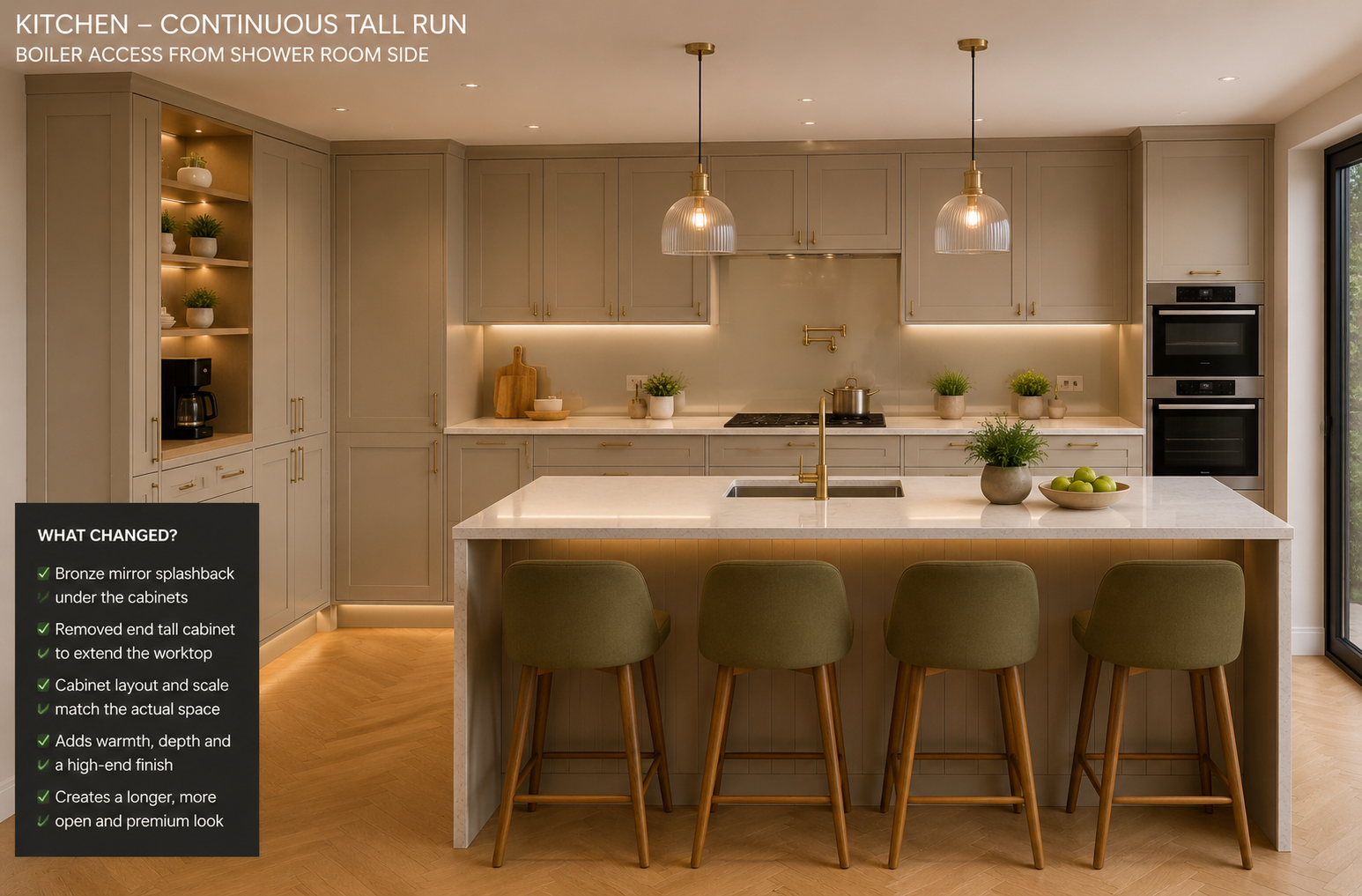
Before we commit a single pound to materials or trades, we generate AI concept renders of every finish — kitchens, bathrooms, joinery, the full spec throughout. It's the same discipline as the three GDV scenarios above: decide what something will look like, and what it will cost, before the money is spent, not after.
It doesn't replace a site visit, a trade's quote, or our own judgement — it removes the guesswork before those conversations happen, so briefs to trades are tighter and change-of-mind costs mid-renovation are rarer.
See the real numbers from our completed projects, or get in touch directly to talk through your own first deal — no pressure, no hard sell.
Two real, numbers-backed guides built from our own deals — not theory.
Everything that gets you properly set up before you buy your first investment property — the people, the paperwork, the company, and the budget.
Get the Free GuideTwo of our own completed deals, in full — what we found, what went wrong, what it actually cost, and what it taught us. On its way — grab the free guide and you'll be first to know when it lands.
Coming Soon